



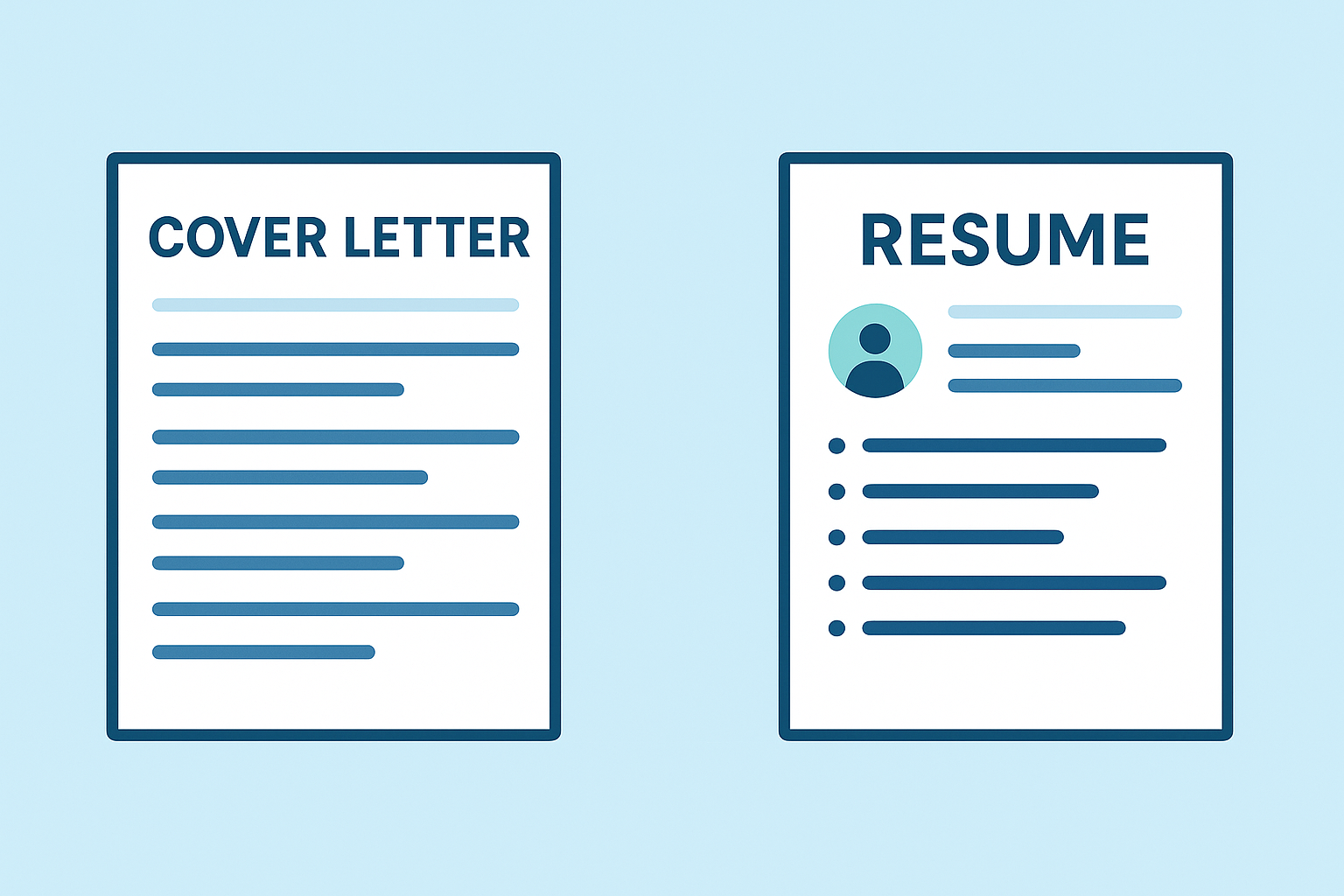
Discover the key differences between a cover letter and a resume, and learn why both are essential for a strong job application.
When applying for a job, many candidates focus only on their resume and forget about the cover letter. While a resume is essential, the cover letter plays a different but equally important role. Understanding the difference between the two can help you present yourself more effectively — and increase your chances of landing an interview.
At inmyresume.com, we make it simple to create both resumes and cover letters that stand out. Here’s what you need to know.
1. What Is a Resume?
A resume is a structured summary of your professional experience, skills, and education. Its purpose is to provide a quick snapshot of your career achievements.
- Format: Bullet points, clear sections, concise wording.
- Content: Work experience, education, skills, certifications, and accomplishments.
- Goal: Show recruiters why you are qualified for the role.
Think of your resume as your professional “factsheet.”
2. What Is a Cover Letter?
A cover letter complements your resume. Instead of listing achievements, it allows you to tell your story and explain why you are the right fit for a specific position.
- Format: A one-page letter written in a professional tone.
- Content: Introduction, motivation for applying, relevant highlights, and a closing statement.
- Goal: Personalize your application and connect your background to the company’s needs.
Where your resume says what you’ve done, your cover letter explains why it matters.
3. Key Differences Between a Resume and a Cover Letter
| Aspect | Resume | Cover Letter |
|---|---|---|
| Format | Structured, bullet points | Narrative, paragraph form |
| Focus | Skills, experience, achievements | Motivation, personality, fit for role |
| Length | 1–2 pages | 1 page |
| Purpose | Show qualifications | Show interest & explain why you’re a match |
4. Why You Need Both
Some candidates skip the cover letter, but doing so can weaken your application. Using both documents gives you a stronger position:
- Resume = credibility → Proves you meet the requirements.
- Cover letter = connection → Shows you’re motivated and aligned with the company’s goals.
Together, they create a full picture of you as both a professional and a person.
5. Best Practices for Writing Both
- Keep your resume concise and results-oriented.
- Make your cover letter personal — address the hiring manager if possible.
- Avoid repeating your resume word-for-word in the cover letter. Instead, expand on 1–2 key achievements.
- Always tailor both documents to the job description.
Final Thoughts
A strong job application includes both a resume and a cover letter. The resume demonstrates your qualifications, while the cover letter adds context, personality, and motivation.
With inmyresume.com, you can create professional resumes and cover letters online, share them easily, or export them in PDF format.
👉 Start building your resume and cover letter today and make your application stand out.